Buying your first home is an exciting milestone—but it can also feel overwhelming. Between financing, showings, inspections, and negotiations, it’s easy to make decisions based on emotion instead of strategy. As a first-time home buyer, avoiding a few common mistakes can save you stress, money, and regret down the road. Whether you’re just starting to browse listings or getting ready to make an offer, understanding these pitfalls can help you feel more confident and prepared throughout the process.
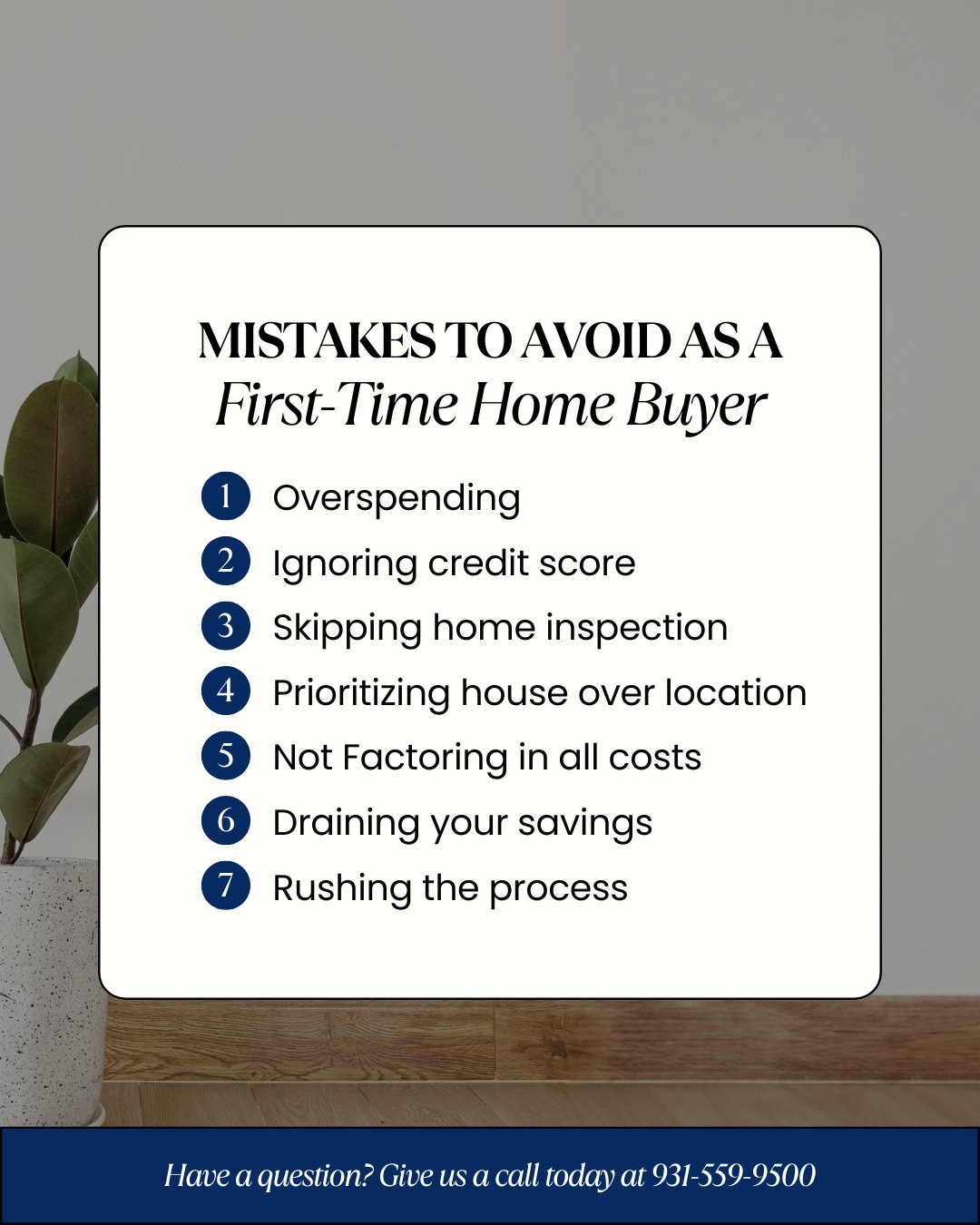
1. Overspending
• Getting approved for a certain amount doesn’t mean you should spend it all
• A higher mortgage can limit flexibility for travel, savings, and future goals
• Property taxes, insurance, and maintenance add up beyond the purchase price
• Buying within your comfort zone helps reduce long-term financial stress
⸻
2. Ignoring Your Credit Score
• Your credit score directly impacts your interest rate and monthly payment
• Even a small difference in rate can cost (or save) thousands over time
• Checking your credit early gives you time to fix errors or improve it
• Better credit often means more loan options and lower upfront costs
⸻
3. Skipping the Home Inspection
• A home inspection can uncover hidden issues not visible during showings
• Problems like roofing, HVAC, plumbing, or foundation repairs can be costly
• Inspections provide leverage for repairs or credits during negotiations
• Waiving an inspection increases risk—especially for first-time buyers
⸻
4. Prioritizing the House Over the Location
• You can update a house, but you can’t change its location
• Consider commute time, schools, resale value, and neighborhood growth
• A great home in the wrong area can affect long-term satisfaction
• Location plays a major role in future appreciation
⸻
5. Not Factoring in All Costs
• Closing costs, inspections, appraisals, and moving expenses add up
• Ongoing expenses include utilities, HOA fees, and routine maintenance
• New homeowners should budget for unexpected repairs
• Planning ahead prevents financial surprises after closing
⸻
6. Draining Your Savings
• Using every dollar for your down payment can leave you house-poor
• An emergency fund is essential for repairs or life changes
• Lenders often prefer buyers to have reserves after closing
• Keeping savings provides peace of mind as a new homeowner
⸻
7. Rushing the Process
• Buying a home is a major financial and emotional decision
• Rushing can lead to overlooked issues or buyer’s remorse
• Taking time allows for better comparisons and stronger negotiations
• A steady, informed approach leads to more confident decisions
Purchasing your first home doesn’t have to be stressful when you have the right information and guidance. By avoiding these common mistakes—like overspending, rushing the process, or overlooking important details—you’ll be better positioned to make a smart, informed decision you feel good about long after closing day. A knowledgeable real estate professional can help you navigate each step, answer your questions, and advocate for your best interests. If you’re thinking about buying your first home or just want to learn more about the process, I’m always happy to help.